FanMeet
FanMeet is a platform that extends fans' concert experiences by building vibrant communities within fandoms, while helping local businesses benefit from fandom-based tourism.
Duration
Sep - Oct 2023
Context
Started with a personal interest in the "concert economy," this solo project explores how a digital platform can improve the experience of live music fans.
My Roles
User Research, Information Architecture, Interaction Design, High-Fidelity Prototyping, Design System Creation, Usability Testing

The Challenge
With this project, I challenged myself to discover ways to enhance the overall concert experience for music fans, looking beyond the artist's performance.
Guiding questions:
What motivates fans to attend concerts, besides seeing their favorite artist?
What are the patterns and dynamics of a concert-goer's overall experience?
How do social interactions among fans shape the overall concert experience?

Exploring the Situation
What desk research told me:
Social media platforms are fans' hubs for sharing their motivators. Two motivations for attending concerts stood out from existing research: fans attend concerts partly for social connection (the joy of being around like-minded people) and partly for status (earning "bragging rights" within a fan community).
Many are traveling to other cities/countries for a concert. A US survey of 850 concert-goers found nearly half spend more on travel and accommodation than on anything else tied to the shows.
No surprise: the host city benefits from fans! Festivals and major artists’ tours boost local economies, and businesses compete for fan attention with artist-themed offers. Even management companies now treat "fan experience" as something to design for beyond the venue. ¹ ² ³
My assumptions after desk research:
Fans are willing to travel between cities for concerts and try to make the most of the trip with side events.
A fan's interaction with other fans extends beyond the concert venue.
Fans respond well to businesses that offer fan-centered experiences.
User Interviews
To test my assumptions against real experience, I interviewed five music fans who had attended at least one concert by their favorite artist, including some who had traveled to another city to do so. I focused on young adults and adults aged 18-40 (Gen Z and millennials who travel independently and are most likely to plan and fund their own concert trips).

I synthesized the responses through an affinity diagram to define patterns across the five conversations. What I found:
Fans, particularly the ones attending concerts solo, appreciate interacting with others at and around the concert venue. They sometimes join fan gatherings announced online, and engaging with other fans feels natural to them.
The information about meetups and concerts is spread across various social media platforms, and unrelated fan discussions often overshadow such announcements. Finding information takes time, effort, and sometimes pure luck.
Fans enjoy seeing special services inspired by their favorite artists as long as they are affordable. They appreciate recognition from businesses and diverse options for celebrating their favorites.
Fans traveling for the concerts often need budget-friendly accommodation and food, as most of their money goes to the ticket. They are generally open to splitting costs with fans and arranging their travels together.
Hold on - are we onto something?
Fans feel comfortable using traditional methods to arrange their trips and accommodations through the apps they already know. They also have the motivation and the behavior (seeking connection, willing to coordinate); they just don’t have a dedicated system to support it, since general social platforms weren't built for it.
Understanding Users
These insights formed the backbone of the primary user archetype: "The Solo Concert-Traveler". They are motivated enough to travel alone on a tight budget for music and are actively looking for a sense of community.

From a fan's perspective, a "concert" is an adventure that extends beyond the show's duration. From the moment they learn about the event to the post-concert blues, the experience includes multiple phases.

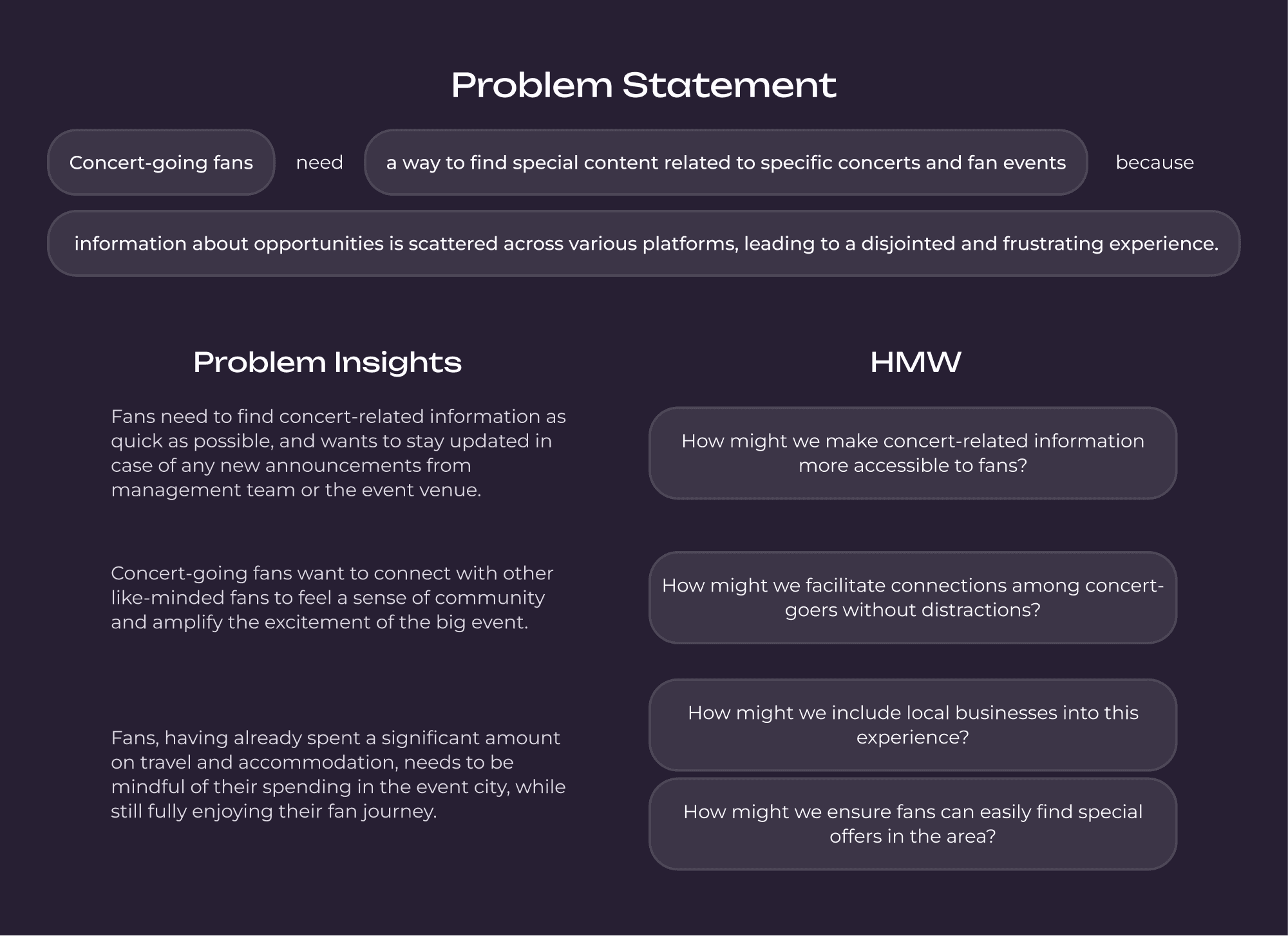
From Insights to "How Might We"s
Identifying a concert-goer's primary actions and potential challenges helped me to address the main issue and formulate specific questions to work on during the ideation process.
Ideation and Building a Strategy
For ideation, I set a five-minute timer and let my creativity fly by noting down all the ideas that popped into my head following these HMW questions.

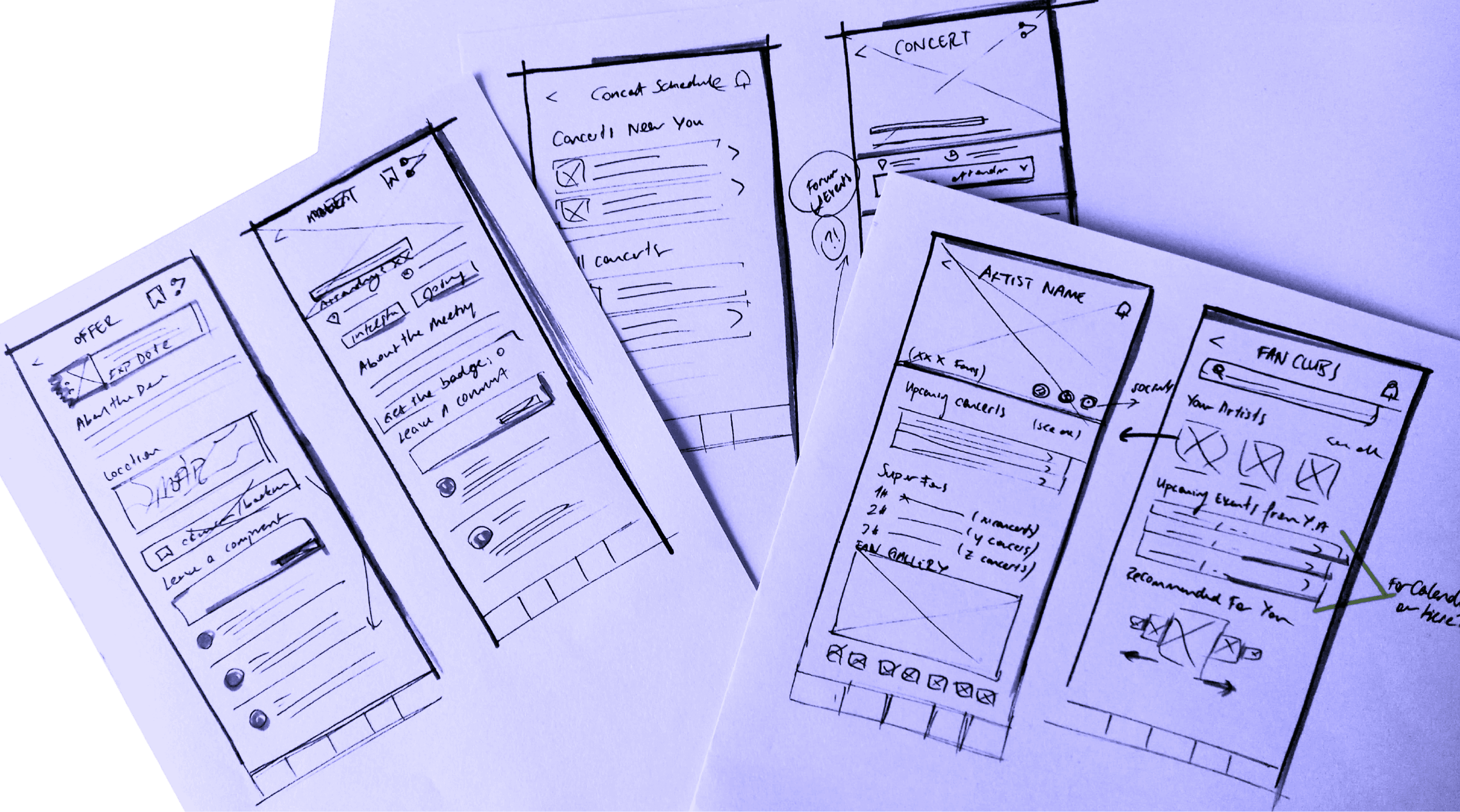
From there, I grouped related ideas and evaluated each cluster against two questions: how much effort would it take to build, and how directly does it address HMWs. This process helped me form the backbone of "FanMeet".

Main Features & Information Architecture
Artist-Based Concert Tracking
Artist pages allow fans to keep up with their favorite artists' schedule updates. The app also utilizes user data to provide personalized recommendations and notifications such as upcoming concerts, ticket availability, etc.
Concert-Based Forums for Fan Engagement
Concert-based forums allow concert-goers to connect earlier, share experiences, discuss local offers, and relive their concert experiences by sharing memories after the event.
Bulletin Board for Fan Meetings Around the Venue
A designated corner where users can post, find, and discuss fan meetups near the concert venue. In this space, fans can organize pre- and post-concert gatherings, share meetup details, and interact with other attendees.
Corner for Local Business Offers
A section that displays special discounts or promotions businesses offer to concert attendees. Both fans and vendors can update this section.
Fan Profiles and Communication Between Fans
Fan profiles include the artists they like, the events they attended, and their badges to proudly showcase their experiences. Concert-goers can check each other's profiles and individually connect through private messaging to share experiences and discuss their plans.
Information Architecture
The structure is built mirroring how fans think: they reach concerts through the artists they follow, not through a general event search.

Usability Testing
After completing mid-fidelity wireframes, I conducted five user tests through Zoom calls, gathering feedback from testers who actively use social media to communicate with other fans:
The task completion rate reached a satisfying 100% score.
3 of 5 participants expressed confusion in understanding distinctions between event types and wanted further visibility on recommendations.
All five testers appreciated the concert-based discussions but wanted concert-page content simplified.
Three changes followed directly:

Visual Design
The visual world of FanMeet is inspired by the blend of dark shadows and the bright spotlights of a concert venue. The choice of purple comes from these spotlights, highlighting the rarity of those magical moments.

Business Value & What's Next
FanMeet provides concert-goers with extended engagement opportunities and potential external offers. By doing so, it also creates opportunities for new strategic partnerships. There are several potentials behind this solution:

What I'd Love to See Next
This was a fast-paced, short-term challenge for myself, but if I had the opportunity, I would have liked to talk with local business owners near concert halls and arenas. This would have helped me better understand their perspectives and strategies. Moderation concerns in this ecosystem are also a challenge I'd also dig deeper into if I had more time.
If I were to work on future iterations, I would also love to explore these:
A system where fans receive exclusive content and offers, potentially involving the artist and their management team
Using the badges offered in the MVP to encourage interactive challenges among fans, rewarding them with special offers, discounts, and merchandise gifts
Real-time interactions to enhance the concert experience, such as polls where fans can vote for the next song during the concert.